
The Dangote Anomaly: A Flash in the Pan or a Forge for a New Nigeria?
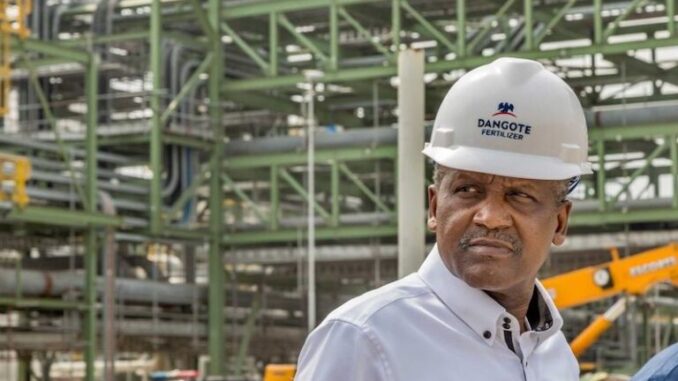
Few names in modern African business provoke as much debate as Aliko Dangote. To admirers, he represents proof that large-scale, indigenous industrialisation is possible in Nigeria. To critics, he embodies the risks of over-concentration of power in a fragile economy. With the Dangote Refinery now operational and positioned as a game-changer for fuel supply, the question many Nigerians are asking is simple but profound: is the Dangote phenomenon a temporary anomaly, or the foundation of a truly new Nigeria?
At first glance, the scale alone feels unprecedented. The Dangote Refinery, one of the largest single-train refineries in the world, promises to reduce Nigeria’s long-standing dependence on imported petroleum products. For decades, Africa’s biggest oil producer paradoxically exported crude only to import refined fuel at huge cost. If sustained, local refining could stabilise supply, conserve foreign exchange, and ease pressure on the naira. In that sense, Dangote’s project addresses a structural weakness successive governments failed to fix.
Supporters argue this is exactly how nations industrialise: through bold, capital-intensive projects led by local champions. Countries like South Korea and India leaned heavily on powerful conglomerates in their early development phases. From this perspective, Dangote is not an anomaly but a late arrival to a model Nigeria should have embraced long ago. Cement, sugar, fertiliser, and now petroleum refining—each sector reflects a deliberate attempt to move Nigeria from consumption to production.
Yet, scepticism persists, and not without reason. One major concern is market dominance. When a single private entity becomes central to essential sectors, competition can suffer. Prices, access, and policy influence risk being shaped more by corporate strategy than public interest. Critics fear that replacing state inefficiency with private monopoly does not automatically translate to shared prosperity. The danger is not Dangote’s success itself, but the absence of strong institutions capable of regulating success fairly.
There is also the question of replication. Can the “Dangote model” be repeated by others, or is it unique to one individual with exceptional access to capital, networks, and policy goodwill? If Nigeria’s industrial future depends on one businessman, then the anomaly argument gains weight. True transformation requires ecosystems—financing for mid-sized manufacturers, reliable power, efficient ports, and consistent policies—so that many Dangotes can emerge, not just one.
Employment and downstream impact further complicate the picture. Mega-projects create jobs, but often fewer than people expect relative to their size, especially once construction ends. The real test is whether such projects stimulate clusters of smaller businesses: logistics firms, maintenance providers, petrochemical manufacturers, and exporters. If the refinery becomes a hub around which broader industrial activity grows, its legacy will be far deeper than fuel prices alone.
Politically, the Dangote story also exposes a Nigerian paradox. The same system that frustrates small entrepreneurs often bends to accommodate mega-investors. Fast-tracked approvals and tailored policies can look like favouritism, even when they deliver national benefits. This fuels public distrust and raises a critical issue: should development rely on exceptional treatment for a few, or systemic reforms that help many?
So, flash in the pan or forge for a new Nigeria? The honest answer may be: neither—yet. Dangote’s ventures have undeniably shifted what Nigerians believe is possible. They challenge the narrative that large-scale industry cannot work locally. But belief alone is not transformation. Without transparent regulation, competition-friendly policies, and deliberate efforts to broaden industrial participation, the gains risk being narrow and fragile.
The Dangote anomaly becomes a forge for a new Nigeria only if it sparks imitation, not dependence; systems, not exceptions; and long-term industrial depth, not short-term relief. The refinery may refine crude, but Nigeria must refine its institutions if this moment is to become a turning point rather than a footnote.
