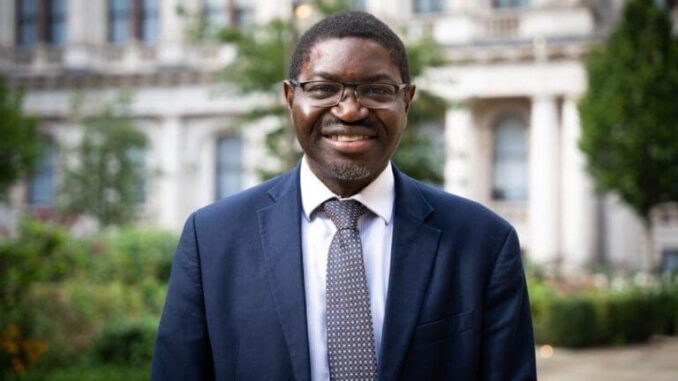
Nigerian-Born Professor Dapo Akande Elected as ICJ Judge
Nigerian-born legal scholar Professor Dapo Akande has been elected as a judge of the International Court of Justice (ICJ), marking a significant achievement for the Nigerian legal community and his international career.
Akande was elected on Tuesday, November 3, 2026, following a vote by the United Nations General Assembly and Security Council. He was the United Kingdom’s nominee for the position and will serve a nine-year term beginning February 6, 2027.
His election also restores Britain’s representation on the world’s principal judicial body after its previous nominee, Christopher Greenwood, failed to secure re-election in 2017.
Akande is the Chichele Professor of Public International Law at the University of Oxford, a fellow of All Souls College and co-director of the Oxford Institute for Ethics, Law and Armed Conflict.
He began his legal education in Nigeria, studying law at the University of Ife, now known as Obafemi Awolowo University (OAU), where he graduated in 1992. He qualified as a barrister and solicitor at the Nigerian Law School in 1993 before proceeding to the London School of Economics, where he obtained a master’s degree in law in 1994.
His professional experience includes advising governments and international organisations, as well as participating in legal proceedings before international tribunals, including the ICJ and International Criminal Court.
Reacting to his election, the professor expressed gratitude to the countries that supported his candidacy and pledged to carry out his responsibilities independently.
He said he was deeply honoured by the opportunity and promised to decide cases through a faithful and impartial application of the law.
Akande also expressed his readiness to contribute to the court’s work in resolving disputes between countries through peaceful means.
The International Court of Justice is the principal judicial organ of the United Nations and is based in The Hague, Netherlands.
It consists of 15 judges elected for nine-year terms by the UN General Assembly and Security Council. Its responsibilities include settling legal disputes submitted by countries and providing advisory opinions on legal questions referred to it by authorised UN bodies.
Although judges are nominated by countries, they serve in their individual capacity and do not represent their respective governments.
Akande’s election places him among the 15 judges responsible for carrying out the court’s judicial mandate and further highlights the international recognition of his work in public international law.